Coffee and Community: How Cafés Near Mosques Bring People Together:

Coffee has always been more than a drink. It’s a bridge — connecting people, ideas, and traditions. In the Muslim world, this connection runs deep. From the spiritual energy of Yemen’s Sufi circles to the lively conversations of Ottoman coffeehouses, coffee has long been tied to faith, reflection, and community.
Today, that tradition lives on through a growing number of cafés near mosques — peaceful, halal-friendly spaces where worship, conversation, and connection flow as smoothly as the coffee itself. These cafés are reviving the age-old Islamic ethos of togetherness — reminding us that the best conversations often begin after prayer, over a shared cup.
Let’s explore how cafés near mosques are building bonds, bridging cultures, and brewing communities across the world.
1. A Spiritual Legacy in Every Sip:
The relationship between coffee and faith began centuries ago in Yemen, where Sufi mystics drank qahwa to stay awake during dhikr (remembrance of God). For them, coffee wasn’t just a stimulant — it was a spiritual tool for mindfulness and focus.
Soon, the practice spread across the Islamic world. Coffeehouses, known as qahveh khaneh, appeared near mosques in Cairo, Istanbul, Damascus, and Mecca. They became gathering places for scholars, poets, and travelers — places to discuss ideas, share stories, and strengthen faith.
Today’s cafés near mosques echo that same rhythm of worship and community. After prayers, people stop by for a cup, a chat, or quiet reflection — continuing a 600-year-old tradition of spiritual connection through coffee.
2. From Prayer Hall to Café: Spaces of Belonging:
Mosques have always been more than houses of worship — they are centers of life. In many cities, the mosque serves as the heart of the neighborhood, hosting not just prayer but study circles, family events, and social initiatives.
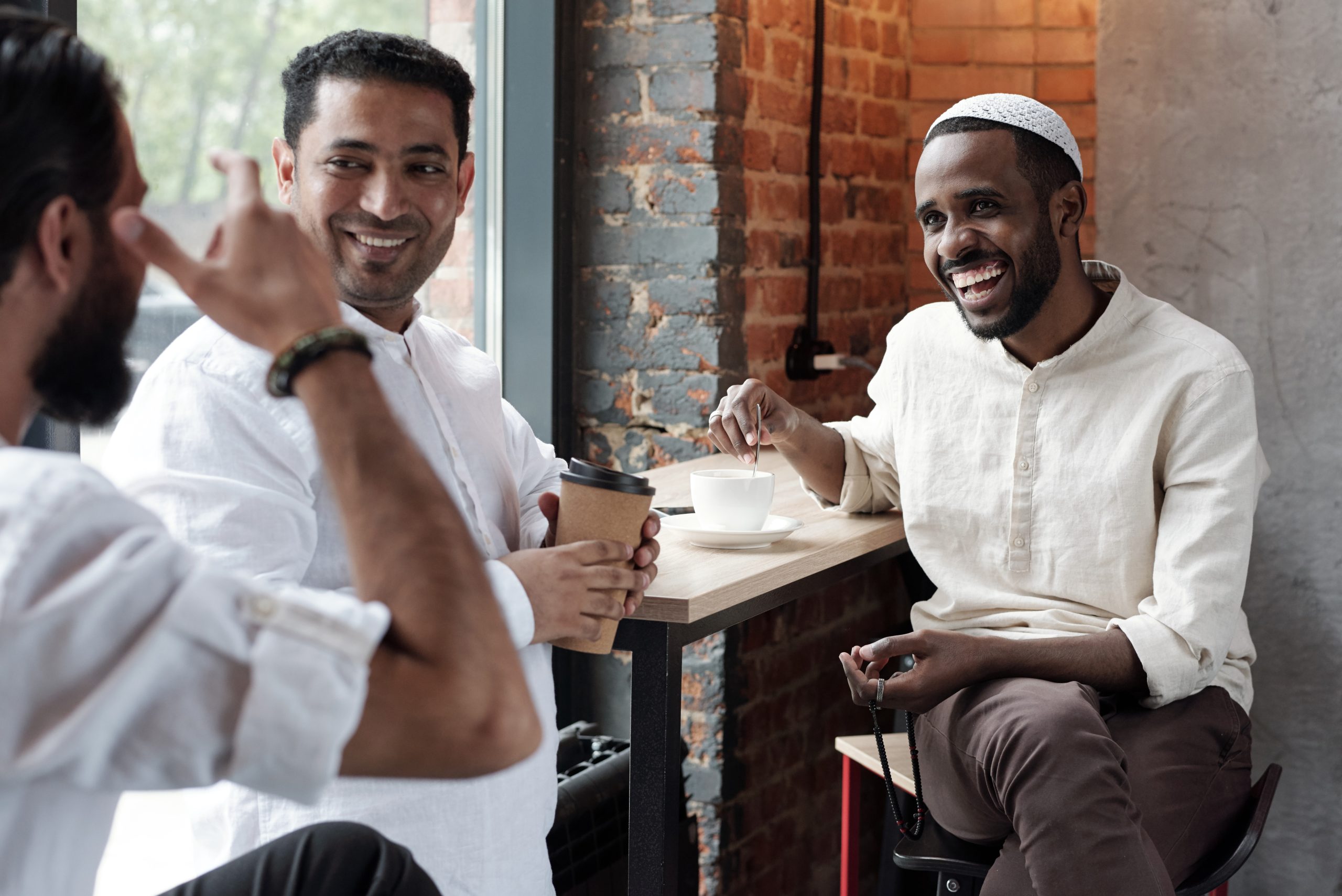
Cafés near mosques naturally extend that sense of belonging into daily life. After Jumu’ah (Friday) prayers, families and friends gather for coffee; during Ramadan nights, people enjoy dessert and tea after taraweeh.
These cafés create an environment where faith and everyday life flow together seamlessly. You can see imams sharing advice with youth over cappuccinos, travelers journaling after Fajr prayer, or groups of students discussing Quranic reflections between study sessions.
Each interaction reaffirms a beautiful truth — that community doesn’t end at the mosque door.
3. Modern Revival of an Old Tradition:
In cities like Istanbul, Kuala Lumpur, London, and Toronto, young Muslim entrepreneurs are reinventing the coffeehouse — merging Islamic heritage with contemporary culture.
Their cafés often sit within walking distance of major mosques and embody values like:
Halal-certified food and beverages.
Inclusive spaces for men, women, and families.
Prayer-friendly environments, sometimes with designated areas or schedules synced to adhan.
Ethical business practices, inspired by Islamic principles of honesty and sustainability.
For example, in Dearborn, USA, Qahwa House celebrates Yemeni coffee culture with traditional brewing and community-driven events. In London, Chaiiwala near East London Mosque has become a post-prayer landmark, serving karak chai and paratha rolls to diverse crowds.
These cafés aren’t just trendy — they’re spiritual ecosystems that blend comfort, culture, and connection.
4. Conversations That Build Community:
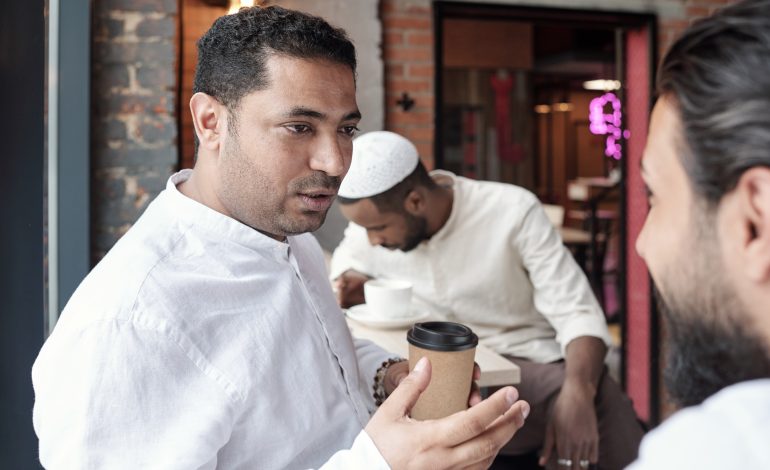
If the mosque is where hearts meet in worship, the café is where they meet in conversation.
In Muslim cultures, hospitality (karam) is a sacred duty — and sharing coffee is often the first act of welcome. The Prophet Muhammad ﷺ said:
“Whoever believes in Allah and the Last Day, let him honor his guest.” (Bukhari & Muslim)
Cafés near mosques embody this hadith every day. They offer a space where people can engage in thoughtful discussions about faith, family, or the world — in an atmosphere of warmth and respect.
You might find:
Elders recounting migration stories to younger generations.
Artists, scholars, and activists discussing new ideas.
Non-Muslim visitors stopping by after mosque tours, eager to learn more about Islam.
These simple interactions help strengthen social bonds and understanding across communities.
5. Coffee and Contemplation: A Modern Sunnah of Mindfulness:
In our fast-paced world, it’s easy to rush through rituals — even prayer or meals. But cafés near mosques encourage something countercultural: slowness and reflection.
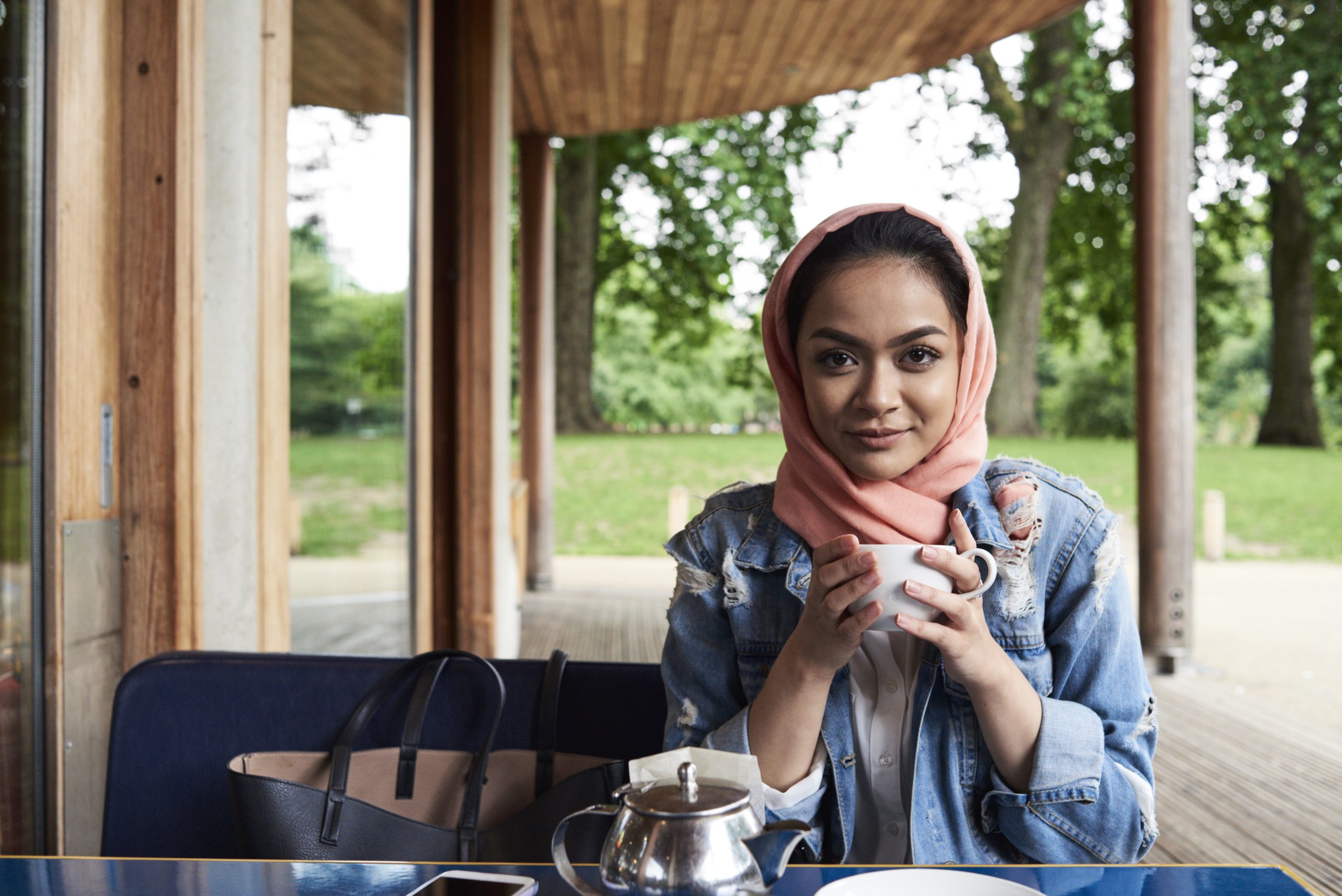
After salah, a quiet coffee moment becomes an extension of spiritual mindfulness. It’s a time to breathe, reflect on gratitude, or simply observe the beauty of community life around you.
Many Muslim-owned cafés intentionally design their spaces for calm — soft lighting, natural materials, and Quranic calligraphy that inspires contemplation. Some even host guided reflection sessions, poetry nights, or wellness workshops.
In doing so, they preserve the spiritual essence of coffee’s origins — the idea that each sip can draw you closer to awareness, not distraction.
6. Global Examples of Cafés that Connect Faith and Community:
Here are some standout examples of coffee shops near mosques that exemplify the beauty of faith-centered community:
Qahwa House – Dearborn, USA:
Steps from several mosques, it’s a haven of Yemeni hospitality, where conversations about culture, identity, and spirituality unfold naturally.Brew 92 – Madinah, Saudi Arabia:
Near the Prophet’s Mosque, this elegant café offers Saudi-grown beans and serene interiors. Many pilgrims stop here for reflection after prayer — it’s modern yet spiritually grounded.Kopi Darussalam – Jakarta, Indonesia:
Near Istiqlal Mosque, this café uses fair-trade beans from Muslim farmers. It hosts charity fundraisers and community dialogues — turning every cup into an act of sadaqah (charity).Chaiiwala – London, UK:
Located near East London Mosque, it’s a local staple where post-Jummah crowds gather to share food, laughter, and fellowship over desi chai.
Each of these spaces captures something timeless — the ummah spirit of togetherness and kindness through simple, everyday gestures.
7. Breaking Barriers and Building Bridges:
Cafés near mosques are also helping foster interfaith understanding and cross-cultural dialogue.
Tourists visiting mosques often look for nearby spots to rest — and many end up in these coffee shops. Friendly staff and regular patrons often turn these encounters into opportunities for conversation about Islam, hospitality, and shared values.
In cities like Dubai, Toronto, and Kuala Lumpur, interfaith groups even host “Coffee & Conversation” events — gatherings that promote understanding across religions.
In this sense, coffee becomes a medium for dawah (inviting to truth) — not through debate, but through warmth, humility, and genuine human connection.
8. Supporting Ethical and Halal Business Practices:
Many cafés near mosques see their mission as more than serving coffee — they view it as a form of service to God and community.
Owners often prioritize:
Halal certification for all products.
Fair-trade sourcing, especially from Muslim-majority regions like Yemen, Ethiopia, and Indonesia.
Local employment and support for community charities.
This ethical approach reflects the Qur’anic principle:
“And establish weight in justice and do not make deficient the balance.” (55:9)
Through these practices, faith-inspired coffeehouses transform daily consumption into acts of responsibility and reward.
9. The Café as a Community Catalyst:
When done right, a coffee shop near a mosque isn’t just a business — it’s a community engine.
These spaces host youth gatherings, charity drives, marriage networking events, and small business workshops. They support local artisans, writers, and students. They offer what urban life often lacks — a sense of belonging.
In this way, coffee becomes a social glue — binding people of faith and purpose together in simple, joyful moments.
10. Final Pour: The Revival of Coffee and Connection:
From the cobblestone alleys of Istanbul to the modern streets of Chicago, cafés near mosques are quietly restoring something the world needs: community.
They remind us that faith doesn’t end with prayer — it continues in how we treat others, how we share time, and how we listen. Coffee, once a Sufi’s companion in devotion, still carries that spiritual energy — connecting hearts, not just awakening minds.
So the next time you step out of a mosque, look for the nearest café. Sit down, order a cup, and smile at a stranger. You’ll be participating in a legacy that began over 500 years ago — one that proves that the simplest acts, when done with intention, can build the strongest communities.